In the forest, all is quiet except for a pair of nesting cranes down in the marshes, whose bugle call arches upwards, echoing back and forth as they communicate their love for one and other. Cranes pair for life, and in Japan they symbolise longevity and lasting love. I admire these birds so much that around three years ago, I had a crane tattooed on my left arm. And then in December last year, I bought a tee shirt for my boyfriend with a Japanese crane printed on the back. In short, they mean a lot to me and I feel awestruck at being so close to these elegant and long-legged birds; like someone who finally meets their idol.
Above me on the branch of a tree, a blue tit sings a merry tune and I hear an answering call from deeper in the forest. I stop and watch it, hoping not to scare it away but it seems spooked by my presence. It flies higher into the branches then ultimately flits away to another tree. Here, the forest is a mess of tree stumps and tire tracks from when the landowner sent in a logging tractor last September. I was lucky enough to see the forest before it was partially destroyed. It was much prettier then but it’s slowly growing back.
I stop to look at a rotten tree stump that has been gnawed by some animal, perhaps a badger. As I ponder this, I hear my boyfriend’s voice in my mind explaining what has caused the tree stump to be so gnarled and I feel a tear rising up in my eye. It’s ridiculous really, he’s only at work. But we’ve spent every day together for the past week and a half; now I’m alone I miss him. I’ve also been very emotional lately, perhaps due to my hormones, and my mood has been up and down.
I tell myself I should keep walking and as I set off, the cranes start calling again. Even the sound of the cranes makes we want to cry as I know that in two more days, I’ll be leaving this place behind and heading back to Leeds: the ram-jammed city full of angry, hurried people, all smoking, drinking and just generally being rude. It’s a far cry from this pristine forest where I’m completely alone; no signs of humanity beyond the beaten path and sawn logs.
My feet sink into the soft spongy earth as I walk further along into the forest which is directly behind my boyfriend’s home. I’ve been in here many times now and although I did get lost once or twice in the beginning, I’m fairly confident I can find my way out in any direction. The forest is home to numerous animal and bird species though they remain elusive most of the time. Despite this, you find telltale signs that something has been there: little patches of muzzled earth, mysterious pathways through the undergrowth, and of course: their poop.

I once chanced upon a pair of moose which gave me quite a fright but thankfully, they were more afraid of me and ran into the forest. For such a large animal, they seemed nimble and in seconds they blended with the trees, disappearing like mist. The truth is, there are numerous hunting dens in these forests and although I have never seen any hunters myself, I know that people do hunt here. It saddens me to think that the very same moose I saw last year may have been shot and killed by now.
I take a deep breath of the forest air, heavy with moisture and with a subtle scent of pine and other earthy smells. I take several long breaths, telling myself I’ll soon be back breathing the polluted air of Leeds; might as well get as much clean air as I can while I’m still here. I can literally feel the moisture in the air entering my mouth as I breath and I consider how different it must be compared to the air in a city. I try to linger a while in this moment but it makes me nervous to stand too long in a forest, as though the sound of my own footsteps make it less lonesome.
I move on again, heading in my usual direction: the route Ingemar showed me the first time we walked here together. Back then, the forest had been lusher and there were vibrant greens everywhere. It was the month of May. Now, almost a year later in March, Spring was still struggling to gain a foothold on Winter and the forest lacked the same mysterious charm. Perhaps it was the novelty of being in a Swedish pine forest for the first time but I remember it being almost mystical–fairy dust floating through the air.
I looked for the nest me and Ingemar had found on that first journey into the forest together. I remember his enthusiasm at finding it and he told me it was probably a hawk or an osprey that was living there. It certainly was very high up; almost invisible, set back in a tall pine. Now it looked abandoned, unkempt; like it had been left alone. Still, the nest acts as a good landmark and I walk past slowly, hoping to gain new information to relay back to Ingemar in the evening. I hear a bird flapping somewhere but it sounds more like a wood pigeon and the nest remains silent. After waiting for no more than a minute, I keep moving.

This part of the forest is where I first saw the moose and I always hold onto the hope of seeing them again. I still remember that first encounter. I heard cracking branches and assumed it was a dog walker. Then, seeing a huge rump disappearing into some bushes, I decided it was a horse. There are horse riders around here so it wasn’t out of the question. Suddenly, a female moose ran off into the forest away from me. I was quite scared and my heart was beating. When I was certain it had gone, I rounded a corner only to see the male, which was even larger, with huge antlers. Despite being large enough to trample me, he ran away, following his mate into the trees where no man-made path follows.
That’s the only time I’ve seen moose in these parts and they seemed terribly nervous; understandably so, being that humans routinely hunt and kill them. There was another time, when I thought maybe I had come close to one but I never saw it; I only heard a weird snorting sound and a large animal moving away in some young pines. It’s crazy to think that there could have been other times when I’ve been just a few feet away from animals in the forest. They’re very different from us humans who go tramping around, breaking branches and walking for walking’s sake.
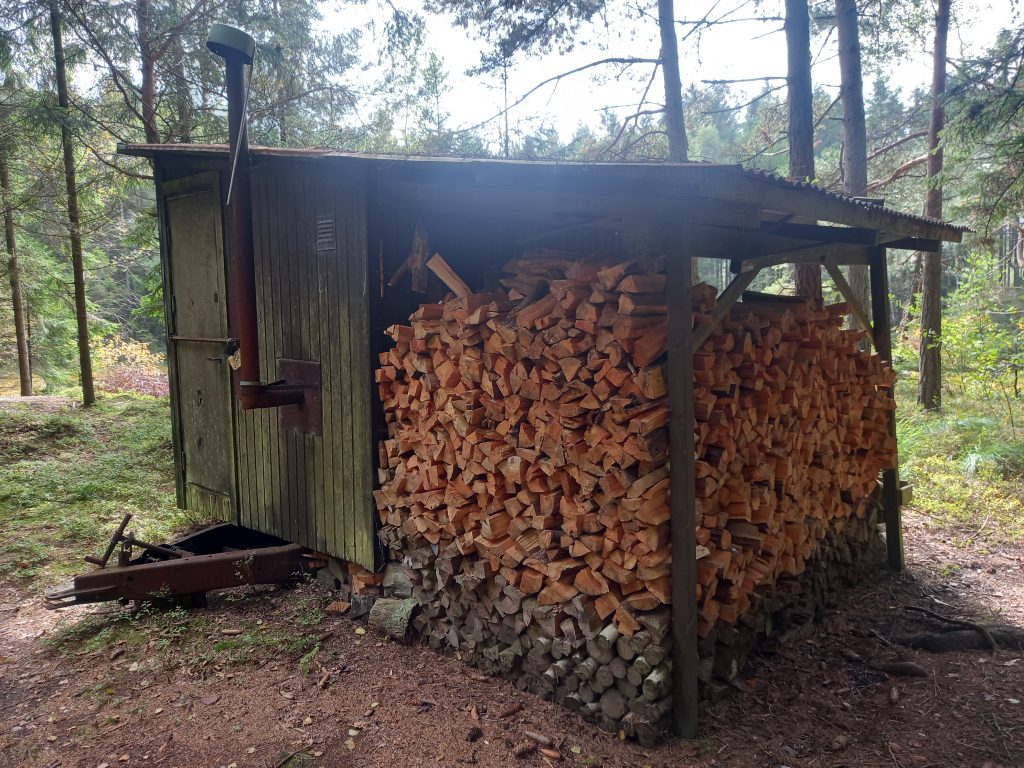
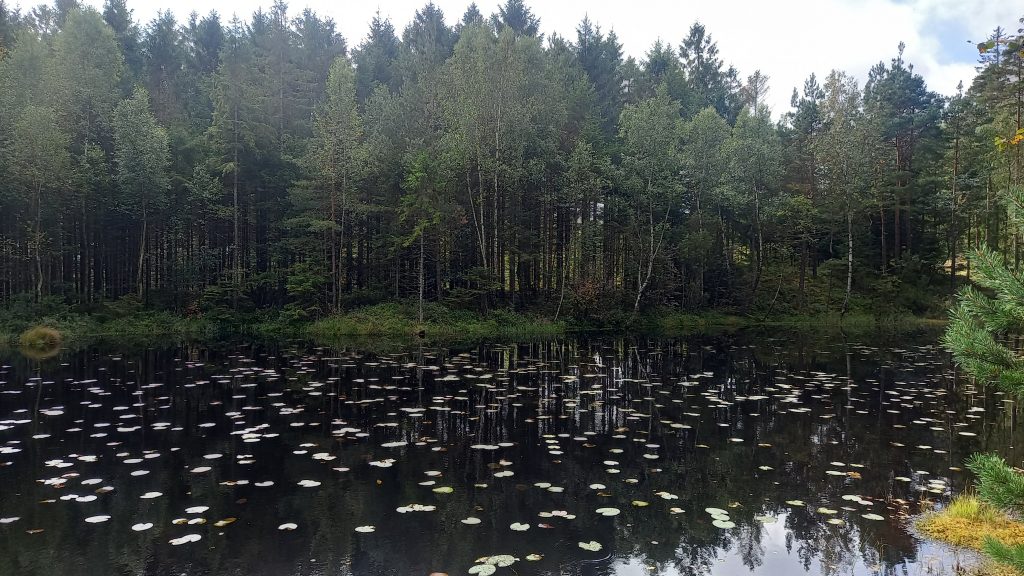
I didn’t see the moose this time, though I tried my best to be quiet. So I just kept on walking, past the loggers’ cabin next to a small pond. Here’s one of the only definite signs of humanity and there always seems to be a recently burned-out fire outside the cabin, suggesting that it does get used fairly often. The pond isn’t very deep and looks almost stagnant, though perhaps it’s used as a watering hole by the animals. The cabin is stacked with a fire wood outside. I don’t know what’s inside; I’ve never looked.
The forest at this point changes character and becomes browner underfoot with evenly spaced pine trees in all directions. The path also opens up as you head towards the exit, which leads onto a pebbled road just wide enough for a small car to drive down. The road here can be accessed from the far side of the forest at the landowner’s property and Ingemar told me a story once how he’d needed an ambulance and they had taken this route which unfortunately becomes too narrow to pass at the bottom and so, the ambulance had to turn round and make its way to his house via a different route. I guess this kind of tale isn’t uncommon in rural areas.
I walked down the stony road, little pebbles popping up and finding their way into my shoes so I had to stop and take them off, clean them out, then keep going. It was a little colder here, too. As the landscape opens up, you’re no longer enclosed by forest and you can see trees and farm houses way off into the distance, disappearing in differing shades of blueish grey. On a sunny day, it’s nice to look across the horizon and admire the beauty of nature. But on slightly windy March morning, it’s just cold and I’m ready for home and the wood stove now.
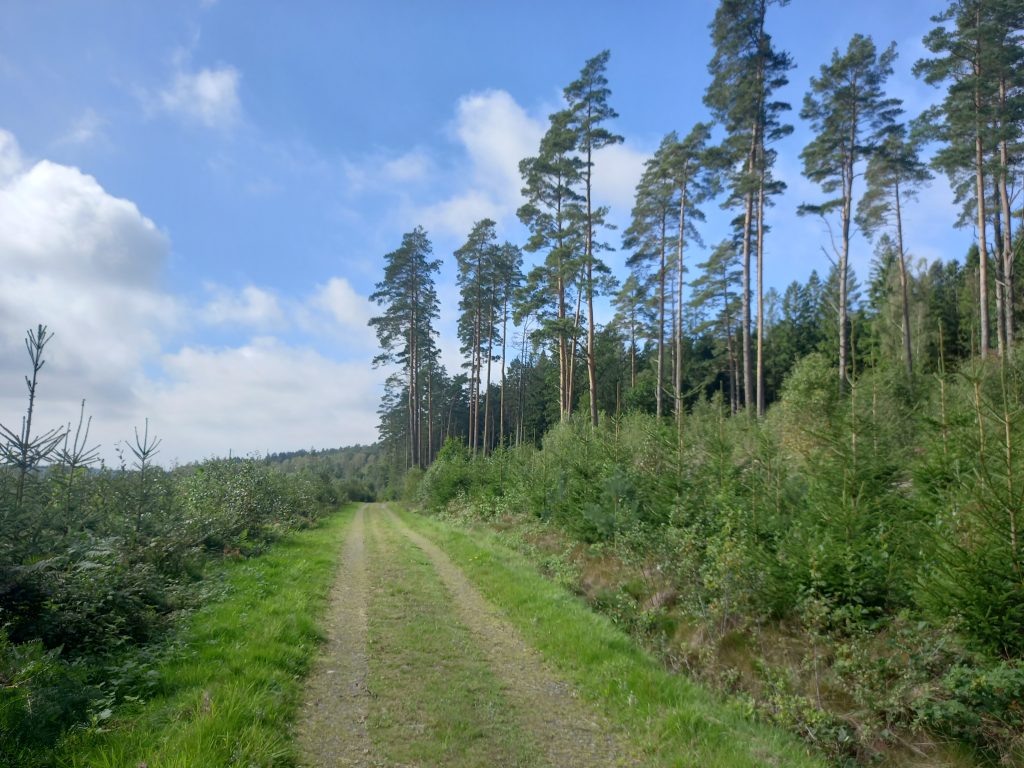
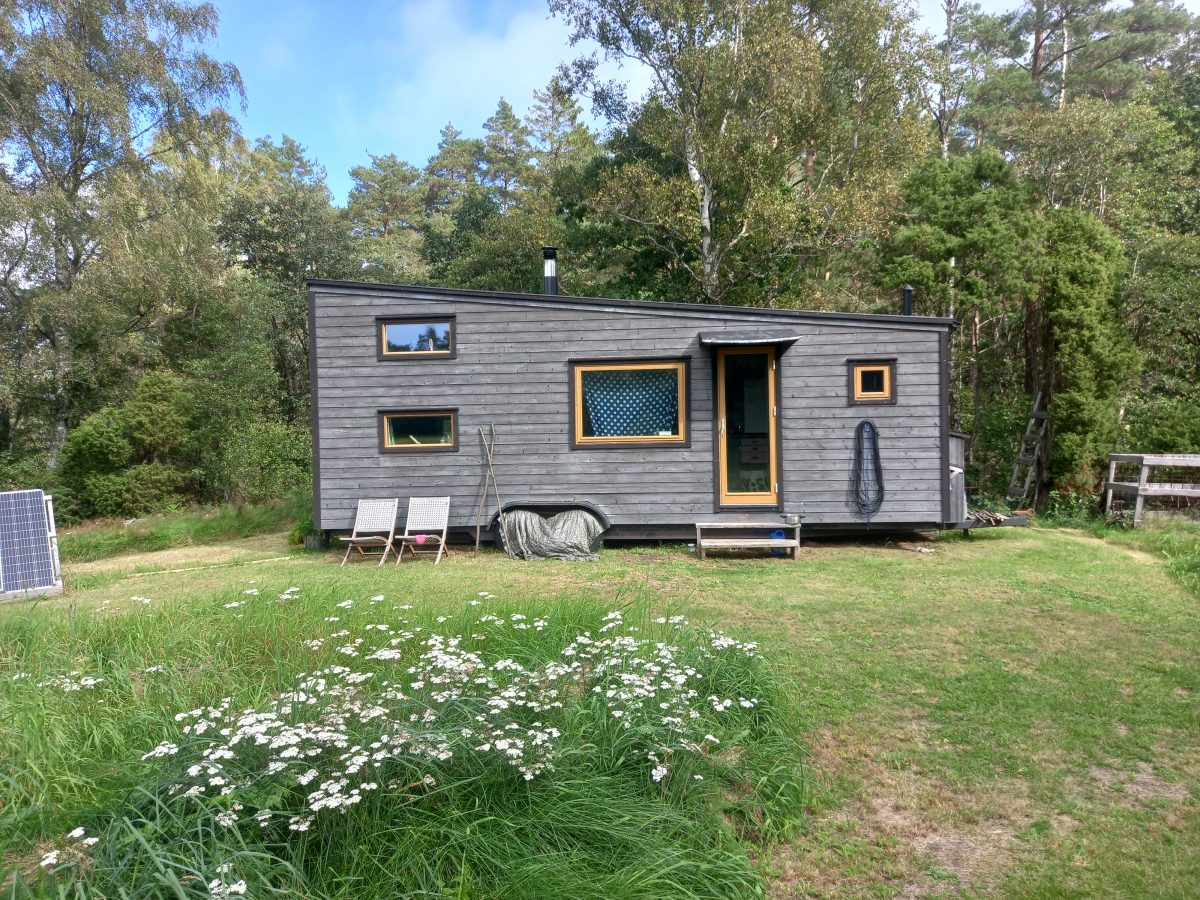
The path is straight and wide here, and the walking is fairly easy until you get to the bottom, where the trees have grown over and the ground is waterlogged. Because of this, I always cut through a small field at the end of my journey. I pass a man-made bird house – clearly the people round here sometimes help the wildlife, too – and up the winding road to Ingemar’s home; The Little House on the Prairie, I call it. He built it five years ago, a testament to his hands-on lifestyle. Its wooden boards are painted in a handsome, slate grey and it stands majestic on the hill top, looking out over a large field; trees in every direction. I head inside to seek coffee and warmth by the stove.